All About Hotel Industry

The hotel industry is a broad sector that encompasses a range of businesses involved in providing lodging and accommodation services to travelers and tourists. Here are some key aspects of the hotel industry: Types of Hotels: Hotels vary in size, services, and amenities offered. They can be classified into several categories, including luxury hotels, boutique hotels, budget hotels, resort hotels, and bed-and-breakfasts. Hotel Operations: Hotel operations include front office services (check-in, check-out, reservations), housekeeping (cleaning and maintaining rooms), food and beverage services (restaurants, bars, room service), and maintenance (keeping the property in good condition). Hotel Management: Hotel management involves overseeing day-to-day operations, ensuring guest satisfaction, managing staff, marketing the property, and maintaining financial records. Revenue Management: Revenue management involves optimizing room rates and occupancy levels to maximize revenue. This includes setting prices based on demand, managing inventory, and using data analytics to make informed decisions. Online Booking and Distribution: Many hotels use online booking platforms and distribution channels to reach potential guests. This includes booking websites, travel agencies, and online travel agents (OTAs) like Booking.com and Expedia. Guest Experience: Providing a positive guest experience is crucial for hotels. This includes offering excellent customer service, comfortable accommodations, and a range of amenities and services to meet guests' needs. Sustainability: Many hotels are adopting sustainable practices to reduce their environmental impact. This includes energy-efficient buildings, waste reduction, and eco-friendly amenities. Technology: Technology plays a significant role in the hotel industry, from online booking systems and mobile check-in to smart room features and guest communication apps. Industry Trends: Some current trends in the hotel industry include the rise of boutique and lifestyle hotels, the growth of experiential travel, and the increasing use of technology to enhance the guest experience. Challenges: The hotel industry faces challenges such as competition from alternative lodging options like Airbnb, labor shortages, and the impact of global events like the COVID-19 pandemic on travel and tourism. Overall, the hotel industry is a dynamic and diverse sector that plays a vital role in the global economy.
The Hotel Industry The hotel industry is a broad sector that encompasses a range of businesses involved in providing lodging ...
Read more

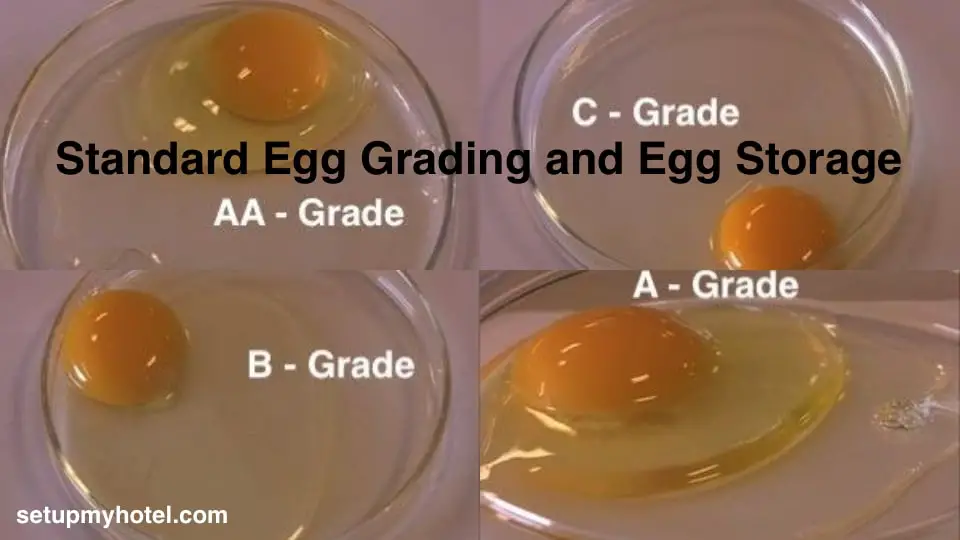
Methods Of Whisking, Handling And Folding Egg White And Egg Yolk

Methods of Whisking, Handling and Folding Egg White and Egg Yolk 1. How to separate egg white and egg yolk professionally? The best way to separate the white and yolk is by using the eggshell.  Avoid breaking the egg into one hand and allow the white to run through the finger.  The white can absorb grease and odours which will inhibit its beating qualities.  Have two bowls ready, Crack the egg as close to its center as possible by hitting the shell firmly against the edge of a bowl or the sharp edge of a counter.  Using your thumbs, pull shells apart, allowing some of the white to fall into The bowl.  Pour yolk from the shell into the shell, allowing white to dribble into the bowl.  Use one side of the shell to detach the remaining white from the yolk.  Use a shell half to remove.  Any bits of yolk that might slip into the bowl.  Place the yolk gently into the second bowl.
Methods of Whisking, Handling and Folding Egg White and Egg Yolk 1. How to separate egg white and egg yolk ...
Read more

9 Uses Of Egg In Cookery | Culinary | Hotel Industry

Uses of Egg in Cookery | Culinary | Kitchen and Hotel Industry Certain foods play a major role in cooking, one of these is the egg. It can be served as a main dish, as an accompaniment to other dishes, or as an ingredient in an item. Due to such versatility, the egg is considered a primary ingredient in culinary preparation, providing moisture, structure, and richness in dishes. It is also an emulsifier and aerator when properly handled and used. For hotel management professionals, culinary students, chefs, etc. it is very important to get familiar with the Eggs characteristics.
Uses of Egg in Cookery | Culinary | Kitchen and Hotel Industry Certain foods play a major role in cooking, ...
Read more

Preventing Burn While Working In Hotel Kitchen

Preventing Burn Injury Hotel Kitchen Chef
How to prevent burn in the hotel kitchen? Understanding the transfer of heat is very important to chefs working in ...
Read more

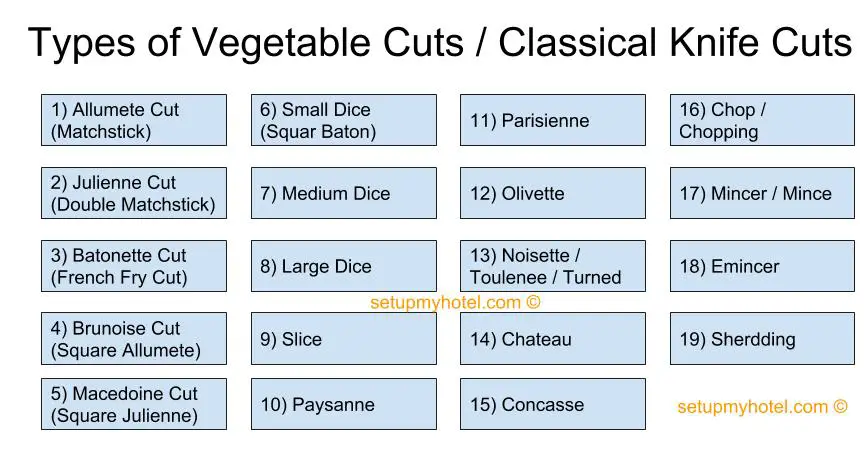
Top 10 Rules For Safe Knife Handling – Chefs | Kitchen | Food Production

How to properly handle the knife in the hotel kitchen? The knife is considered by chefs as their most valuable and versatile tool in the kitchen. It is a toll with respect and when handled properly by an individual proficient in its use, can appear to be a thing of wonder.  The proper knife usage begins with good safety practices. Below are a few basic rules of safe knife usage that need to be followed by the kitchen staff or chefs.
How to properly handle the knife in the hotel kitchen? The knife is considered by chefs as their most valuable ...
Read more

43 Types Of Herbs And Spices Used In Hotel Kitchen | Food Production
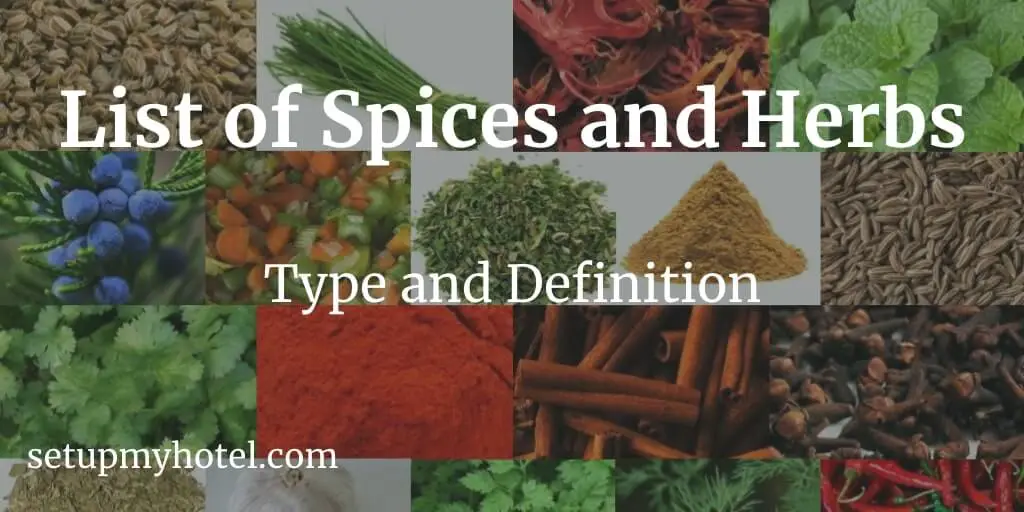
Types and Definitions of Herbs and Spices Used in Hotel Kitchens Spices: The term spice comes from Latin meaning 'Fruits of the earth'. Spices, as distinguished from herbs, are derived from various parts of the plants. For example, Cinnamon is taken from the bark, cloves from the buds, saffrons from the flower, allspice from the fruit, ginger from the root, mustard from the seed, etc. Herbs: Herbs are the second category of flavoring agents used in food, the term herbs comes from the Latin meaning 'Grass'. Herbs are defined as the leaves and stems of soft-stemmed, non-woody plants. Examples are Savory, Sage, Thyme, Rosemary, Oregano etc. Below you can find the list of most commonly used spices and herbs in the hotel kitchen department. All chefs should have a very good understanding and knowledge about the types of spices and their use in cooking.
Types and Definitions of Herbs and Spices Used in Hotel Kitchens Spices: The term spice comes from Latin meaning ‘Fruits of the ...
Read more

Checklist For Selecting Online Booking System For Hotels

Checklist for selecting a booking System for your hotel Website An integral part of any Hotel website is its capability to generate maximum online bookings from its website, As a decision maker or the owner it is crucial to select the right booking engine for your hotel website when it comes to return on investments, usability, multi-platform availability, and functionality. At present many companies in the market allow you to accept bookings online either through your website or through a third-party booking site. All of these systems offer Quick and efficient ways to manage your internet bookings, administration and management of room availability, and prices, send automated confirmation letters, and also link to a payment gateway.
Checklist for selecting a booking System for your hotel Website An integral part of any Hotel website is its capability ...
Read more

Use Of Thermometer In Hotel Kitchen / Food Production

What is the use of a Thermometer in the hotel kitchen? In the food production or kitchen environment microbes are in general the most wanted enemy. Fortunately, most of the microbes grow slowly at refrigerator temperatures and they can be also eliminated or killed if brought up to a higher temperature. For this reason, continuously monitoring and controlling the temperature of the food is very important. Temperatures will be taken at all steps in the food flow in the kitchen receiving, storing, preparing, cooking, transporting, and serving. Always use calibrated thermometers to ensure the safety of food served to customers. All employees involved in the production or service of food must take temperatures at critical steps throughout the flow of food.
What is the use of a Thermometer in the hotel kitchen? In the food production or kitchen environment microbes are ...
Read more

Hotel Marketing Plan And Marketing Cycle

Marketing Plan in the Hospitality Industry The hotel marketing mix is a set of strategies used by hotels to promote their products and services to potential customers. It includes the four Ps of marketing: product, price, place, and promotion. Product refers to the hotel's physical offering, such as rooms, amenities, and services. Hotels often differentiate themselves based on the quality and uniqueness of their products. For example, some hotels offer luxury suites with personalized butler service, while others provide budget-friendly rooms with basic amenities. Price is the amount that customers pay for the hotel's products and services. It is important for hotels to set prices that are competitive within the market, while also considering their own costs and profit margins. Dynamic pricing strategies are commonly used in the hotel industry, where prices may fluctuate based on demand and seasonality.
Marketing Plan in the Hospitality Industry The hotel marketing mix is a set of strategies used by hotels to promote ...
Read more

Kitchen Key Terms Complete List (A-Z) / Food Production Key Terms / Culinary Terms / Kitchen Jargons
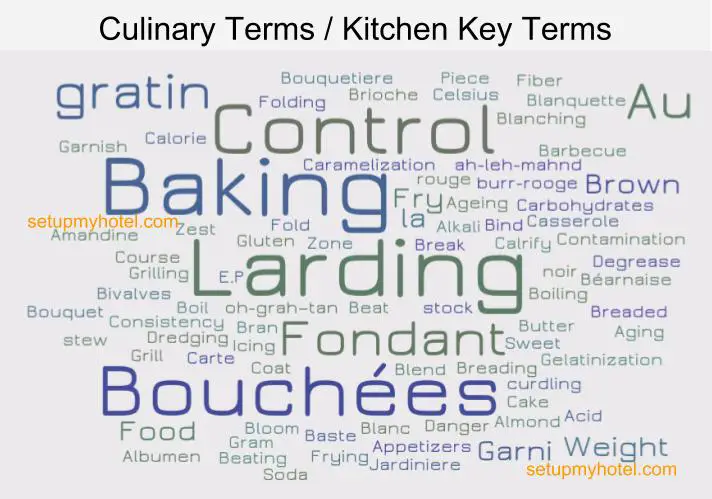
In the world of food production and cooking, there are a variety of key terms and kitchen terms that are important to understand. These terms cover everything from ingredients and cooking techniques to measurements and equipment. Some common food production key terms include mise en place, which refers to the organization and preparation of ingredients before cooking; emulsify, which describes the process of combining two liquids that don't normally mix, such as oil and vinegar; and deglaze, which involves adding liquid to a pan to loosen up the browned bits of food left behind after cooking. Additionally, there are many kitchen terms that are essential for any home cook or professional chef to know. These can include things like julienne, which means to cut food into thin, matchstick-like pieces; sauté, which involves cooking food in a small amount of oil or butter over high heat; and simmer, which is a cooking method that involves cooking food in liquid over low heat for an extended period of time. By understanding these food production key terms and kitchen terms, cooks can better navigate their way around the kitchen and create delicious meals with confidence.
Food Production Key Terms / Kitchen Terms / Culinary Terms / Kitchen Jargon In the world of food production and ...
Read more