Types Of Spoons And Knives Used For Food & Beverage (F&B) Service

Different Types of Spoons and Forks Used in Food and Beverage Services In the food and beverage industry, there are various types of spoons and forks available for different purposes. These tools are not just for serving food but also for enhancing the dining experience. One of the most common types of spoons is the teaspoon, which is used for stirring tea or coffee, adding sugar, or tasting small portions of food. A tablespoon, on the other hand, is larger and used for serving larger portions of food, such as mashed potatoes or vegetables. For soups and stews, a soup spoon is usually used. It is deeper and wider than a regular spoon and can hold more liquid. There is also a dessert spoon, which is slightly smaller than a tablespoon and used for eating dessert. When it comes to forks, the most widely used type is the dinner fork. It is used for eating the main course of a meal, such as meat or fish. A salad fork is smaller and used for eating salads or appetizers. Another type of fork is the dessert fork, which is smaller than a salad fork and used for eating desserts. A seafood fork is also available, which has a long and narrow handle and used for extracting meat from shells. Overall, the use of different types of spoons and forks adds to the elegance and sophistication of the dining experience.
Different Types of Spoons and Forks Used in Food and Beverage Services In the food and beverage industry, there are ...
Read more

BAR – List of Small Tools and Equipment’s Used in Hotel BAR

When it comes to running a successful hotel bar, having the right tools and equipment is essential. While the specific items may vary depending on the size and style of the establishment, there are a few key items that are commonly used in most hotel bars. One of the most important tools in any hotel bar is a cocktail shaker. This versatile tool is used to mix and blend a wide variety of drinks, from classic cocktails to modern creations. Other important tools include jiggers, which help bartenders measure out precise amounts of liquor, and mixing spoons, which are used to stir and blend ingredients. In addition to these basic tools, many hotel bars also make use of specialized equipment such as blenders, juicers, and ice crushers. These tools help bartenders create a wide range of drinks, including frozen cocktails, fresh juices, and crushed ice drinks. Overall, having the right tools and equipment is essential for any hotel bar looking to create a memorable and enjoyable experience for its customers. By investing in high-quality tools and regularly maintaining them, hotel bars can ensure that they are always ready to create delicious and refreshing drinks for their guests.
List of Small Tools and Equipment Used in Hotel BAR When it comes to running a successful hotel bar, having ...
Read more

Defining Reservation Policies In Restaurants | Coffee Shops (F&B) – Hotels | Resorts

Reservation Policy for Restaurants
Defining Reservation Policies in Restaurants | Coffee Shops Introduction: What are hotel restaurants’ reservation policies? Many hotels have a “reservation ...
Read more

Five Step Process In Restaurant Revenue Management Approach

Five Step Process in the restaurant revenue management program
Five-Step Process In Revenue – Management Approach The five-step process outlined above was used to develop a revenue management strategy ...
Read more

Advantages Of Using Point Of Sales (POS) System In Hotels

e various services and transactions are managed. Here are the key functions of a Point of Sale system in hotels: Order Processing: Facilitate order entry for various hotel services, including restaurant meals, room service, bar drinks, and other amenities. Menu Management: Manage and update menus, including item descriptions, prices, and availability. The system should accommodate changes in real-time and provide an easy way to modify offerings. Billing and Invoicing: Generate accurate bills for guest orders, incorporating taxes, service charges, and any other applicable fees. This ensures transparency in pricing. Integration with Room Charges: Seamlessly integrate with the hotel's property management system (PMS) to link POS transactions with guest room charges, simplifying the billing process for guests. Payment Processing: Accept various payment methods, such as credit cards, cash, and mobile payments. Ensure secure and efficient processing of transactions. Split Billing: Allow for split billing when guests in a group want to pay separately. This functionality is essential for handling different payment preferences. Inventory Management: Monitor and manage inventory levels for food, beverages, and other consumables in real-time. This helps prevent stockouts and reduce wastage. Employee Management: Assign and track orders to specific staff members. POS systems can also manage employee permissions, ensuring only authorized personnel can perform certain functions. Sales Reporting and Analytics: Provide detailed reports on sales, revenue, and inventory. Analytics tools can help identify popular items, peak sales periods, and trends, aiding in strategic decision-making. Customer Relationship Management (CRM): Capture customer information during transactions, allowing the hotel to build a customer database. This data can be used for targeted marketing campaigns and personalized services. Promotions and Discounts: Implement and manage promotions, discounts, and loyalty programs. The POS system should be capable of applying discounts automatically based on predefined rules. Table Management: For hotels with restaurants, the POS system can assist in managing table reservations, assigning tables, and optimizing seating arrangements. Kitchen Display System (KDS) Integration: Integrate with a Kitchen Display System to improve communication between the kitchen and the front-of-house staff, reducing errors and enhancing order efficiency. Multi-Location Support: Hotels with multiple dining outlets or branches can benefit from a POS system that supports operations across different locations, providing centralized management and reporting. Security and Compliance: Ensure data security and compliance with payment industry standards. Implement user authentication, encryption, and other security measures to protect sensitive information. By incorporating these functions, a Point of Sale system in hotels becomes a comprehensive tool for streamlining operations, enhancing guest experiences, and optimizing overall efficiency in managing various aspects of the hotel's service offerings.
Advantages Of Using Point Of Sales (POS) System In Hotels  Introduction: Point of sale (POS) systems play an important role in ...
Read more

Main Functions And Features Of Point Of Sale (POS) System In Hotels
Point of Sale (POS) systems play a crucial role in the hospitality industry, particularly in hotels, where various services and transactions are managed. Here are the key functions of a Point of Sale system in hotels: Order Processing: Facilitate order entry for various hotel services, including restaurant meals, room service, bar drinks, and other amenities. Menu Management: Manage and update menus, including item descriptions, prices, and availability. The system should accommodate changes in real-time and provide an easy way to modify offerings. Billing and Invoicing: Generate accurate bills for guest orders, incorporating taxes, service charges, and any other applicable fees. This ensures transparency in pricing. Integration with Room Charges: Seamlessly integrate with the hotel's property management system (PMS) to link POS transactions with guest room charges, simplifying the billing process for guests. Payment Processing: Accept various payment methods, such as credit cards, cash, and mobile payments. Ensure secure and efficient processing of transactions. Split Billing: Allow for split billing when guests in a group want to pay separately. This functionality is essential for handling different payment preferences. Inventory Management: Monitor and manage inventory levels for food, beverages, and other consumables in real-time. This helps prevent stockouts and reduce wastage. Employee Management: Assign and track orders to specific staff members. POS systems can also manage employee permissions, ensuring only authorized personnel can perform certain functions. Sales Reporting and Analytics: Provide detailed reports on sales, revenue, and inventory. Analytics tools can help identify popular items, peak sales periods, and trends, aiding in strategic decision-making. Customer Relationship Management (CRM): Capture customer information during transactions, allowing the hotel to build a customer database. This data can be used for targeted marketing campaigns and personalized services. Promotions and Discounts: Implement and manage promotions, discounts, and loyalty programs. The POS system should be capable of applying discounts automatically based on predefined rules. Table Management: For hotels with restaurants, the POS system can assist in managing table reservations, assigning tables, and optimizing seating arrangements. Kitchen Display System (KDS) Integration: Integrate with a Kitchen Display System to improve communication between the kitchen and the front-of-house staff, reducing errors and enhancing order efficiency. Multi-Location Support: Hotels with multiple dining outlets or branches can benefit from a POS system that supports operations across different locations, providing centralized management and reporting. Security and Compliance: Ensure data security and compliance with payment industry standards. Implement user authentication, encryption, and other security measures to protect sensitive information. By incorporating these functions, a Point of Sale system in hotels becomes a comprehensive tool for streamlining operations, enhancing guest experiences, and optimizing overall efficiency in managing various aspects of the hotel's service offerings.
Functions Of Point Of Sale System In Hotels Point of Sale (POS) systems play a crucial role in the hospitality ...
Read more

History Of The Food Service Industry [Timeline]
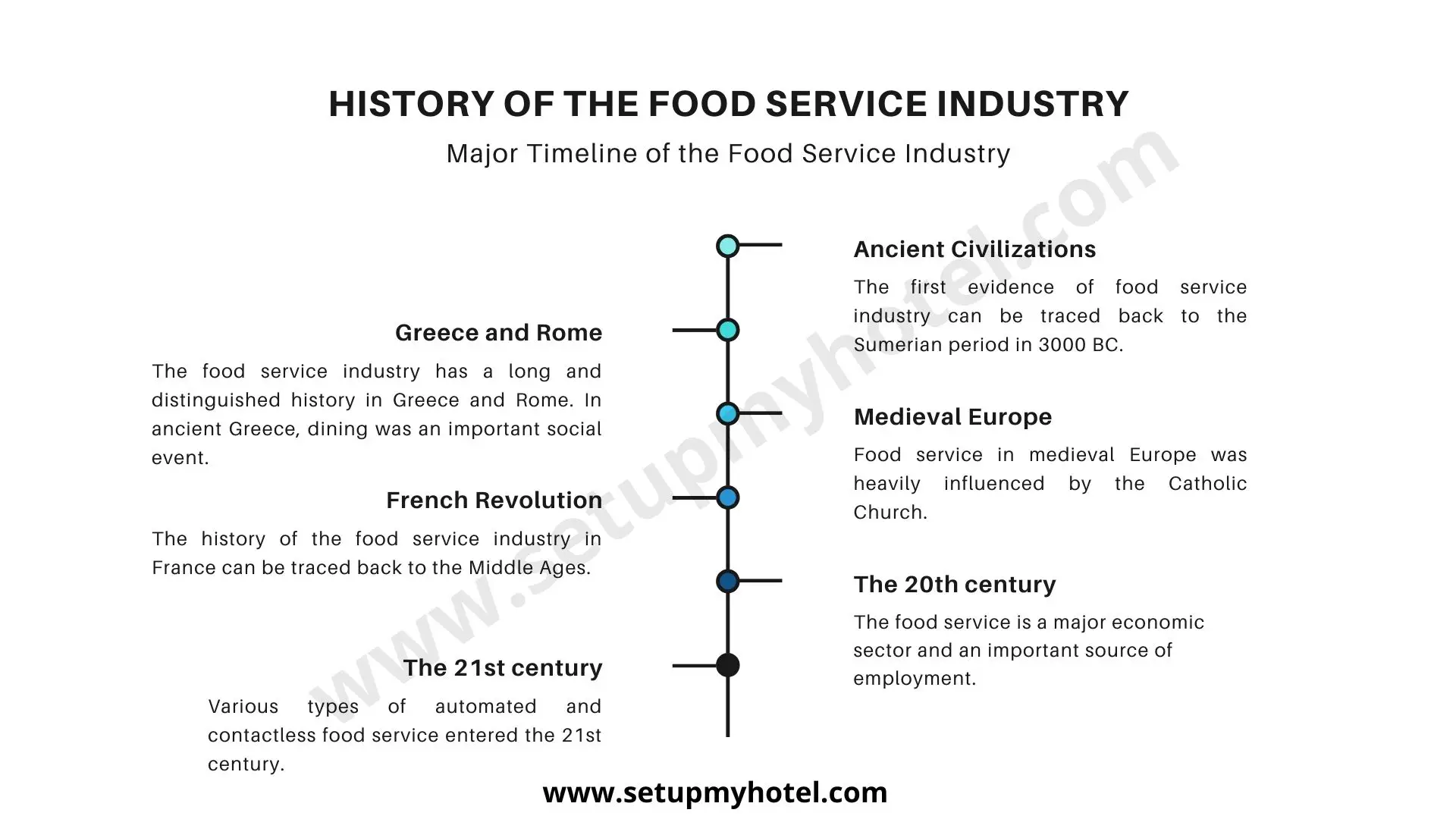
History Of The Food Service Industry. The history of the food service industry is a rich and diverse journey that spans centuries and cultures. Here is a brief overview of key developments in the evolution of the food service industry: Ancient Civilizations: The roots of the food service industry can be traced back to ancient civilizations, where inns and taverns provided meals and accommodations to travelers. Ancient Rome had thermopolia, which were establishments where hot food and drinks were sold. Medieval Europe: During the Middle Ages, the concept of the restaurant as we know it today began to take shape. Public eateries, known as "cook shops," started emerging in major European cities, offering simple meals for purchase. Renaissance: The Renaissance period saw the rise of the formal restaurant in France. In 18th-century Paris, establishments like Boulanger and Beauvilliers gained fame as places offering soups and other "restaurants" or "restoratives." Industrial Revolution: The Industrial Revolution brought significant changes to the food service industry. With urbanization and the growth of the middle class, more people sought meals outside the home. The emergence of cafes and restaurants became more widespread. Railroad and Travel: The expansion of railroads and travel in the 19th century further fueled the food service industry. Railway dining cars and station restaurants catered to travelers, contributing to the standardization of meals. 20th Century: Fast food gained prominence in the mid-20th century with the rise of chains like McDonald's, KFC, and Burger King. This era also saw the development of the franchise model, leading to the globalization of certain food service brands. Fine Dining and Culinary Excellence: In the latter half of the 20th century, the food service industry witnessed a surge in fine dining establishments. Renowned chefs like Julia Child and the rise of culinary schools contributed to a greater emphasis on culinary excellence. Technology and Delivery: The late 20th century and early 21st century brought technological advancements, influencing the food service industry. Online ordering, food delivery apps, and digital marketing became integral components of many establishments. Health and Sustainability Trends: In recent years, there has been a growing emphasis on health-conscious eating, organic ingredients, and sustainable practices. Consumers are increasingly interested in the source of their food and its impact on the environment. Globalization: The food service industry has become highly globalized, with a fusion of culinary influences from around the world. International cuisines are more accessible, and restaurants often showcase diverse culinary traditions. Pandemic Impact: The COVID-19 pandemic significantly impacted the food service industry, leading to increased reliance on takeout and delivery services, the adoption of contactless technologies, and a renewed focus on safety and hygiene. The history of the food service industry reflects societal changes, technological advancements, and evolving consumer preferences. From humble beginnings to a complex and diverse landscape, the industry continues to adapt and innovate in response to shifting trends and demands.
History Of The Food Service Industry The Introduction: One of the most fascinating developments in the history of food service ...
Read more

The Main Factors Of Restaurant Revenue Management
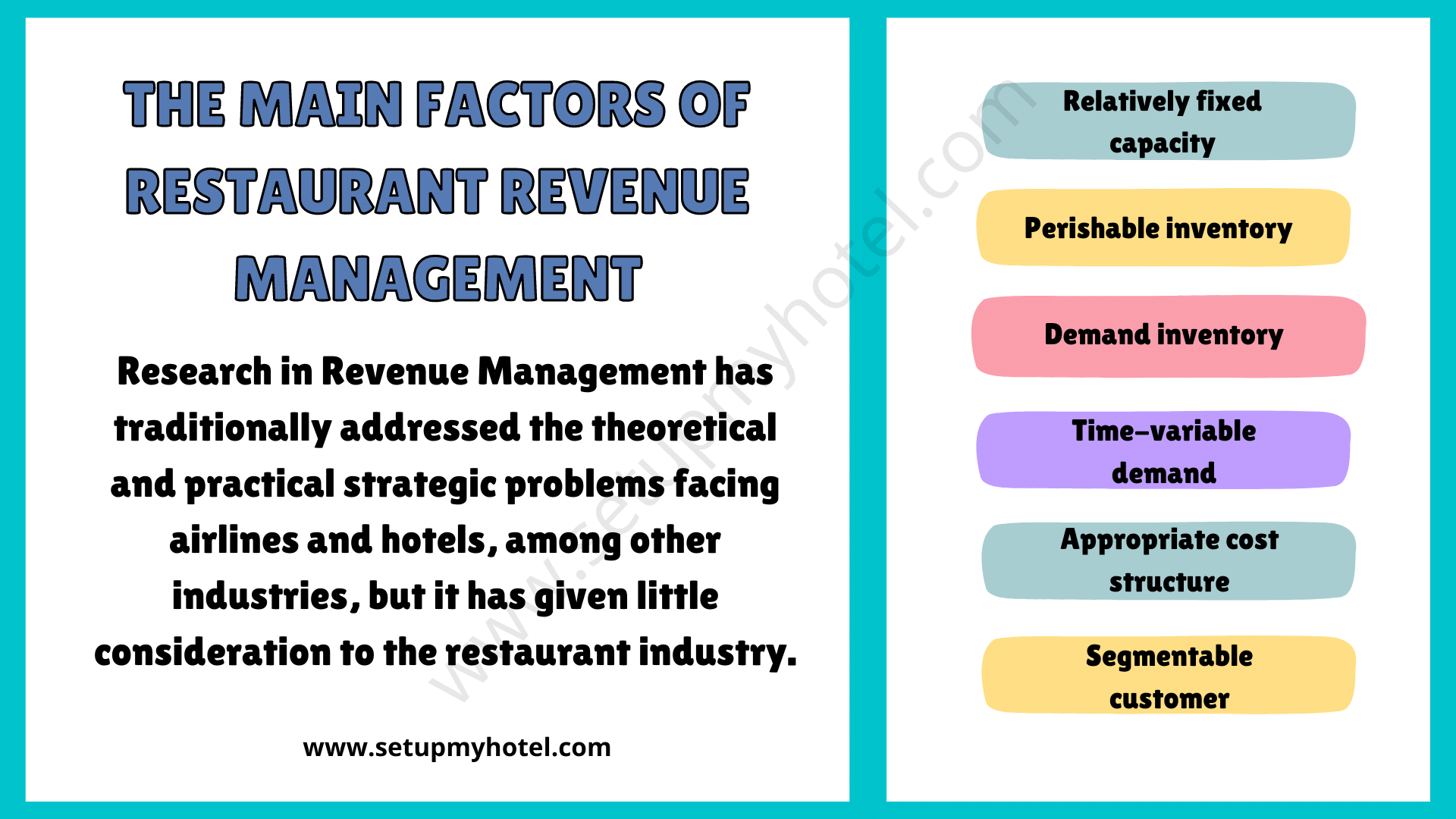
Restaurant revenue management involves a strategic approach to pricing, marketing, and operations to maximize revenue and profitability. Key factors influencing restaurant revenue management include: Pricing Strategies: Implement dynamic pricing based on factors such as peak hours, day of the week, seasonality, and special events. Adjust menu prices to optimize revenue during different periods. Menu Engineering: Analyze the popularity and profitability of menu items. Focus on promoting high-margin items and consider adjusting prices or portion sizes for less profitable items. Demand Forecasting: Utilize historical data and trends to forecast demand accurately. Anticipate peak periods and allocate resources accordingly to enhance efficiency during busy times. Table Turnover Optimization: Increase table turnover rates during peak hours by optimizing service speed without compromising quality. Manage reservations efficiently and encourage bookings during busy periods. Promotions and Specials: Design strategic promotions and specials to attract customers during slower periods. Implement happy hours, discounted packages, or limited-time offers to stimulate demand. Online Reservation Systems: Implement an efficient online reservation system to manage bookings effectively. Encourage customers to book in advance, helping you plan staffing levels and optimize table turnover. Customer Relationship Management (CRM): Utilize CRM systems to collect and analyze customer data. Identify and reward loyal customers, personalize marketing efforts, and encourage repeat business through loyalty programs. Staff Training for Upselling: Train staff to upsell and cross-sell strategically. Encourage suggestive selling of high-margin items and promote special offerings to increase the average check value. Adaptive Marketing Strategies: Implement marketing strategies that adapt to changing market conditions. Utilize digital marketing channels, social media, and targeted campaigns to attract different customer segments. Technology Integration: Leverage technology solutions such as point-of-sale (POS) systems and analytics tools to gather data and insights. Use technology to streamline operations, improve efficiency, and make informed decisions. Capacity Management: Optimize seating capacity by strategically arranging tables and adjusting reservations during peak hours. Balance the desire for a full house with the need for efficient table turnover. Feedback and Reviews Management: Monitor customer feedback and online reviews. Address concerns promptly, as positive reviews can attract more customers, while negative ones may impact your reputation and revenue. Partnerships and Collaborations: Collaborate with local businesses or event organizers to host joint promotions or events. This can attract a broader audience and increase foot traffic during specific periods. Data Analysis: Regularly analyze financial and operational data to identify trends, opportunities, and areas for improvement. Use data-driven insights to refine strategies and adapt to changing market conditions. By focusing on these factors, restaurant owners and managers can implement effective revenue management strategies, ultimately leading to increased profitability and sustained success.
The Main Factors Of Restaurant Revenue Management Restaurant revenue management involves a strategic approach to pricing, marketing, and operations to ...
Read more

The Sequence Of Service In Restaurant (Stages Of Food Service)
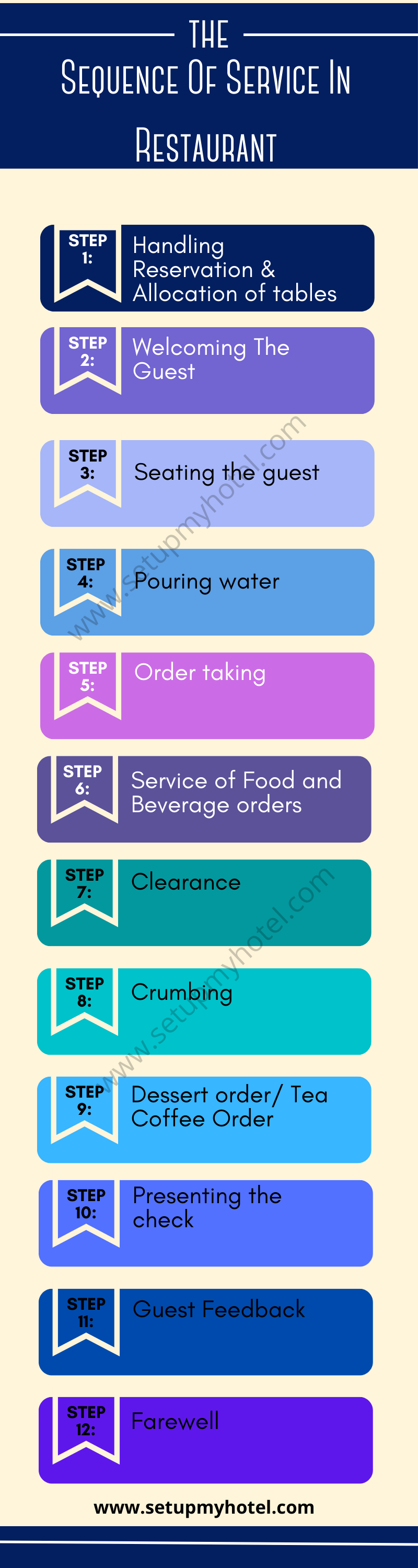
The sequence of service in a restaurant is a crucial aspect of providing a great dining experience for guests. It involves a step-by-step process that ensures that guests receive their meals in a timely and efficient manner. The first step in the sequence of service is greeting the guests and seating them at their table. This is a good opportunity for the server to introduce themselves and make the guests feel welcome. The server should also take the time to explain any specials or promotions that the restaurant is currently offering. Once the guests are seated, the server should take their drink orders and provide them with menus. It is important that the server is knowledgeable about the menu and can answer any questions the guests may have. After the guests have ordered their meals, the server should ensure that their drinks are topped up and inform the kitchen of the order. When the meals are ready, the server should deliver them promptly and check that everything is to the guests' satisfaction. Throughout the meal, the server should continue to check on the guests and ensure that they have everything they need. Once the meal is finished, the server should clear the table and offer dessert or coffee. Finally, the server should present the bill and process the payment in a timely and efficient manner. By following this sequence of service, the restaurant can provide an enjoyable and memorable dining experience for its guests.
The Sequence Of Service In Restaurant The sequence of service in a restaurant is a crucial aspect of providing a ...
Read more

Tips For Optimizing Hotel Websites For Maximum Bookings And Revenue

Optimizing a hotel website for maximum online bookings and revenue involves a combination of design, functionality, and marketing strategies. Here are some tips to enhance your hotel website and attract more online bookings: Responsive Design: Ensure your website is mobile-friendly and has a responsive design. Many users book hotels on their smartphones, so a seamless mobile experience is crucial. User-Friendly Navigation: Simplify navigation to make it easy for visitors to find information about rooms, rates, amenities, and the booking process. Use clear and intuitive menus and include a prominent call-to-action for bookings. High-Quality Visuals: Use high-quality, professional images to showcase your hotel, rooms, amenities, and surrounding areas. Visuals play a significant role in influencing a potential guest's decision to book. Compelling Content: Craft compelling and informative content. Highlight unique selling points, amenities, and benefits of staying at your hotel. Use persuasive language to encourage bookings. Clear Call-to-Action (CTA): Place a clear and prominent "Book Now" or "Reserve" button on every page. Make it easy for visitors to initiate the booking process at any point during their website visit. Transparent Pricing: Clearly display room rates, any additional fees, and taxes. Avoid hidden charges to build trust with potential guests. Offer discounts or promotions to incentivize direct bookings. Online Booking Engine: Implement a user-friendly and secure online booking engine. Minimize the number of steps required to complete a booking and offer a guest-friendly calendar for selecting dates. Guest Reviews and Testimonials: Showcase positive guest reviews and testimonials on your website. Encourage satisfied guests to leave reviews, as positive feedback can influence potential guests. Special Offers and Packages: Create attractive packages or special offers exclusive to your website. This can entice visitors to book directly for added value. Social Proof: Integrate social media feeds or display social proof to build credibility. Highlight any awards, certifications, or recognition your hotel has received. Loyalty Programs: Implement a loyalty program to encourage repeat bookings. Promote the benefits of joining the program on your website. SEO Optimization: Optimize your website for search engines (SEO) to improve visibility in search results. Use relevant keywords, meta tags, and ensure your website loads quickly. Email Marketing Integration: Capture visitor emails through a newsletter signup or during the booking process. Utilize email marketing to engage with past and potential guests, sharing promotions or updates. Live Chat Support: Implement a live chat feature to assist visitors in real-time, addressing any queries they may have during the booking process. Localized and Personalized Content: Tailor content to your target audience and incorporate localized elements. Personalize the user experience based on user preferences and past interactions. Regularly monitor website analytics to track user behavior, identify areas for improvement, and refine your strategies to optimize the booking process continually.
Tips for Optimizing Hotel Websites for Maximum Online Bookings and Revenue The Current hotel booking trends in many countries indicate ...
Read more