Job Description For Hotel Accounts Receivable Clerk

Accounts Receivable Clerk, As a hotel accounts receivable clerk, your primary responsibility is to manage the hotel's financial resources. This includes keeping track of all incoming payments and ensuring that all bills and invoices are paid on time. You will work closely with the hotel's accounting department to create and maintain accurate financial records. In addition to managing the hotel's financial resources, you will also be responsible for interacting with guests and handling any billing inquiries they may have. It is important that you possess excellent customer service skills and are able to communicate effectively with guests. To be successful in this role, you should have a strong attention to detail, be highly organized, and have a solid understanding of basic accounting principles. A degree in accounting or finance is preferred, but not required. Experience working in a hotel or hospitality environment is also a plus. Overall, the hotel accounts receivable clerk plays a critical role in ensuring the hotel's financial stability and maintaining positive relationships with guests. If you are interested in a career in finance and have a passion for the hospitality industry, this may be the perfect job for you.
Job Description, Duties, Interview Questions and Salary For Hotel Accounts Receivable Clerk As a hotel accounts receivable clerk, your primary ...
Read more

Job Description For Hotel Finance Controller

Hotel Finance Controller. The hotel finance controller plays a vital role in the financial management of a hotel. They are responsible for overseeing the financial operations of the hotel, including accounting, budgeting, forecasting, and financial reporting. The finance controller works closely with the hotel's management team to ensure that financial goals are met and financial risks are minimized. They are responsible for analyzing financial data and providing recommendations to improve financial performance and profitability. Some of the key responsibilities of a hotel finance controller include managing the hotel's cash flow, preparing financial statements, overseeing accounts payable and receivable, and managing the hotel's budget. They may also be responsible for developing financial policies and procedures, as well as implementing internal controls to ensure compliance with financial regulations. To be successful in this role, a hotel finance controller should have a strong understanding of accounting principles and financial management. They should be detail-oriented, analytical, and able to communicate financial information effectively to both financial and non-financial stakeholders. A bachelor's degree in accounting or finance is typically required, along with several years of experience in financial management, preferably in the hospitality industry.
Job Description, Duties, Interview Questions and Salary For Hotel Finance Controller The hotel finance controller plays a vital role in ...
Read more

Job Description For Supply Clerk

Supply Clerk Duties and Responsibilities. The role of a Supply Clerk in Hotels is a crucial one. The Supply Clerk is responsible for ensuring that all necessary supplies are available in sufficient quantity to meet the needs of the hotel's guests and staff. This includes everything from toiletries and linens to cleaning supplies and office products. The Supply Clerk is also responsible for maintaining accurate inventory records and ordering supplies as needed. They must be organized and detail-oriented, with strong communication skills to work effectively with vendors, colleagues, and hotel management. This role requires physical stamina, as the Supply Clerk must be able to lift and move heavy boxes and supplies. The ideal candidate will have a positive attitude, a strong work ethic, and a willingness to learn and adapt to changing needs and priorities. Overall, the Supply Clerk plays a vital role in ensuring that the hotel runs smoothly and guests have a comfortable and enjoyable stay.
Job Description, Duties, Interview Questions and Salary For Supply Clerk Position The role of a Supply Clerk in Hotels is ...
Read more

23 Basic Pastries, Cakes And Desserts For Bakers And Pastry Chef

Basic Pastries Cakes and Desserts Hotel Chef Training. Baking is a wonderful way to express creativity and satisfy a sweet tooth. Whether you are a seasoned baker or a beginner, learning the basics of pastries, cakes, and desserts is essential. These classic treats can be enjoyed on their own or as a complement to a meal. Pastries come in many forms, from flaky croissants to buttery shortbread cookies. They are made by combining flour, butter, sugar, and eggs. The dough is then rolled out and shaped into the desired form. Popular pastry treats include turnovers, tartlets, and cream puffs. Cakes are a staple at celebrations and can be customized to suit any occasion. The basic ingredients for a cake include flour, sugar, eggs, and baking powder. From there, you can add flavorings like vanilla extract or cocoa powder and decorate the cake with frosting, sprinkles, or fresh fruit. Desserts are the perfect way to end a meal on a sweet note. From creamy puddings to fruity sorbets, there are endless options to choose from. Some classic desserts include apple pie, crème brûlée, and chocolate mousse. Whether you are looking to impress guests or simply satisfy a craving, mastering the basics of pastries, cakes, and desserts is a worthwhile endeavor for any baker or pastry chef.
Basic Pastries, Cakes and Desserts For Bakers and Pastry Chef Baking is a wonderful way to express creativity and satisfy ...
Read more

Types Of Stock – White | Brown | Vegetable | Fish

Types of Stock Used for Cooking. When it comes to cooking, the type of stock you use can make a big difference in the flavor and richness of your dishes. There are several types of stocks, but the most commonly used ones are white, brown, vegetable, and fish. White stock is made by simmering chicken or beef bones with vegetables such as onions, celery, and carrots. It has a light color and delicate flavor that makes it perfect for soups and sauces. Brown stock, on the other hand, is made by roasting the bones and vegetables before simmering them. This gives it a deeper, richer flavor and darker color. Brown stock is great for beef stews and gravies. Vegetable stock is made by simmering vegetables such as onions, carrots, celery, and mushrooms. It is a great option for vegetarians and vegans, but can also be used in meat-based dishes to add flavor. Finally, fish stock is made by simmering fish bones and vegetables such as onions, carrots, and celery. It has a light, delicate flavor that pairs well with seafood dishes. No matter what type of stock you choose, it is an essential ingredient in many recipes and can help elevate the flavor of your dishes.
Types of Stock – White | Brown | Vegetable | Fish When it comes to cooking, the type of stock ...
Read more

Types Of Broth – How It Is Made? | Broth Vs Stock
When it comes to cooking, there are many terms that can be confusing, especially if you’re new to the culinary world. Two terms that are often used interchangeably are broth and stock. While they may seem similar, there are some key differences between the two. Broth is typically made by simmering meat, vegetables, and herbs in water. The ingredients are cooked for a shorter period of time compared to stock, usually less than two hours. Broth is usually seasoned with salt and pepper and can be consumed as a standalone dish or used as a base for soups, stews, and sauces. Stock, on the other hand, is made by simmering bones, meat, vegetables, and herbs in water for a longer period of time, usually four to six hours. The goal of making stock is to extract as much flavor and nutrients as possible from the ingredients. Stock is usually unseasoned and used as a base for soups, stews, and sauces. Both broth and stock have their own unique flavor profiles and can be used in a variety of dishes. Knowing the difference between the two can help you choose the right ingredient for your recipe and achieve the desired result.
What is Broth? How does it differ from Stock? Broth and stock are similar in technique and cooking time. Meat, ...
Read more

Stock Thickening And Binding Agents Used In Hotel Kitchen
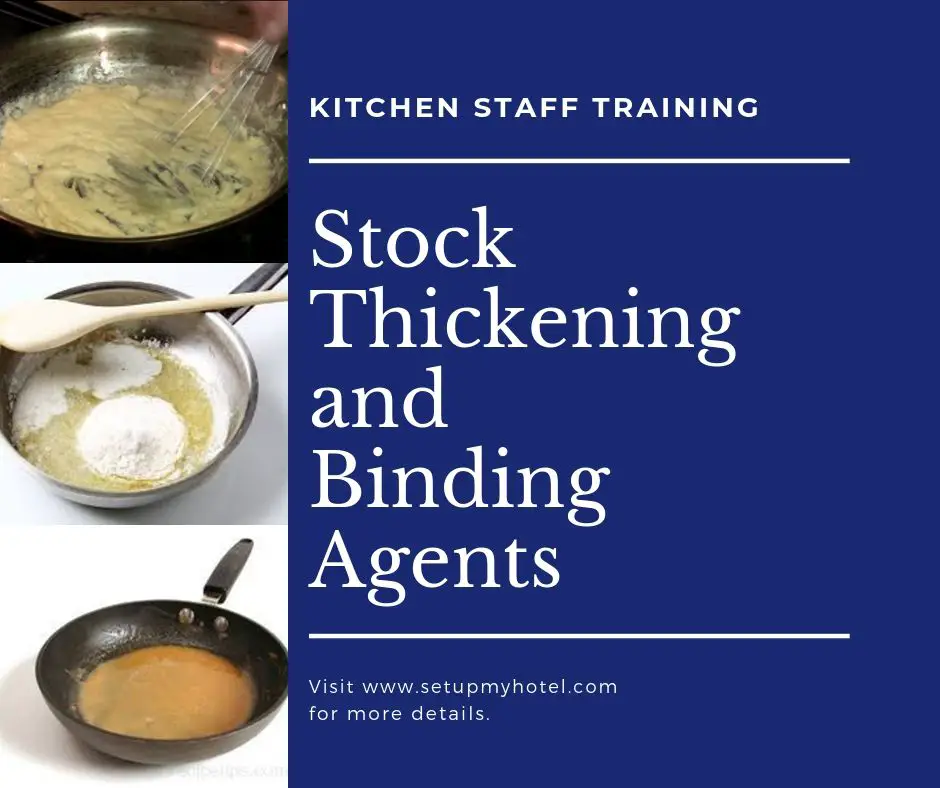
There are a variety of standard stock thickening and binding agents that are commonly used in cooking and baking. Some of the most popular options include cornstarch, flour, arrowroot, and gelatin. Cornstarch is a fine white powder that is made from corn. It is a great thickening agent for sauces, gravies, and soups because it dissolves easily and creates a smooth texture. Flour, on the other hand, is a more versatile option that can be used for both thickening and binding. It is often used in baking to help dough and batter hold together. Arrowroot is a starchy powder that is derived from the roots of tropical plants. It is a great option for thickening sauces and gravies because it creates a glossy finish and doesn't add any flavor. Gelatin is another popular option that is made from animal collagen. It is commonly used in desserts like jellies and puddings to create a smooth and creamy texture. No matter what type of thickening or binding agent you choose, it is important to follow the recipe instructions carefully to ensure that the finished dish has the desired texture and consistency.
Standard Stock Thickening and Binding Agents Thickening agents give body, consistency, and palatability when used. They also improve the nutritive ...
Read more

The Six Mother Sauces: A Beginner’s Guide To French Cuisine
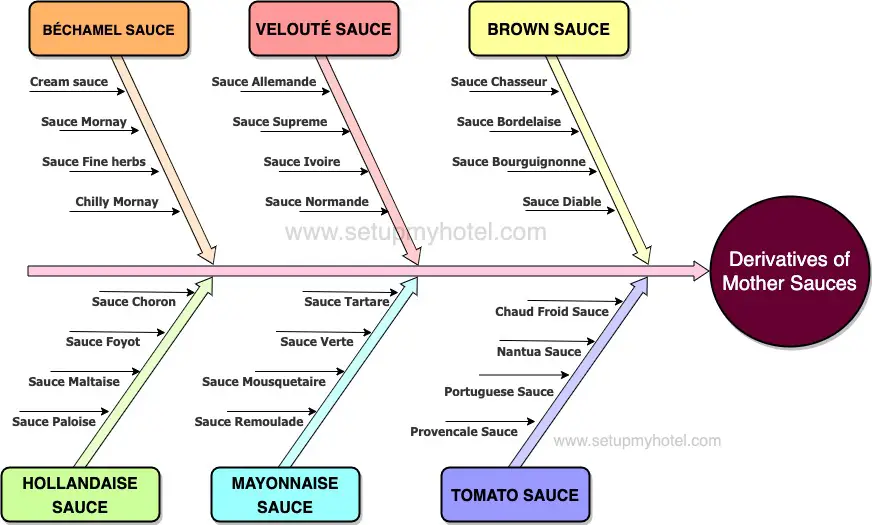
Basic mother sauces are the foundation of French cuisine and consist of five sauces: Béchamel, Velouté, Espagnole, Tomato, and Hollandaise. These sauces can be further enhanced by creating derivatives, which are variations that incorporate additional ingredients or flavors. One popular derivative of Béchamel is Mornay sauce, which adds cheese to the base sauce. Velouté can be transformed into a supreme sauce by incorporating heavy cream and egg yolks. Espagnole can be turned into Bordelaise sauce by adding red wine and shallots. Tomato sauce can be transformed into Arrabiata sauce by adding chili peppers and garlic, or into a Puttanesca sauce by adding anchovies, olives, and capers. There are numerous other derivatives that can be created by modifying the mother sauces, making them more versatile and adaptable to a wide range of recipes and culinary styles. Experimenting with these sauces and their derivatives can open up a world of possibilities in the kitchen, allowing for endless creativity and culinary exploration.
Derivatives of Basic Mother Sauce’s Basic mother sauces are the foundation of French cuisine and consist of five sauces: Béchamel, ...
Read more

Purpose And Function Of Sauces In Culinary Work

Purpose and Functions of Sauces. Sauces play an essential role in culinary work. They serve as a flavor enhancer, help bring together diverse ingredients, and can transform a dish into a masterpiece. Sauces come in different varieties, and each has its unique flavor, texture, and aroma. Whether it's a tomato-based sauce, creamy sauce, or a tangy vinaigrette, sauces can take a dish from ordinary to extraordinary. In addition to providing flavor, sauces also serve a functional purpose. They can be used to tenderize meat, add moisture to a dish, and even thicken a sauce or soup. Sauces can also be used to give a dish a specific texture, such as a velvety smoothness or a chunky consistency. Sauces are a versatile ingredient and can be used in various dishes, from appetizers to main courses to desserts. Chefs often experiment with different sauces to create unique flavor combinations and elevate their cooking to the next level. Overall, sauces are a crucial component of culinary work and can make all the difference in a dish's taste and presentation.
The Purpose and Function of Sauces in Culinary Work Sauces play an essential role in culinary work. They serve as ...
Read more

Classification Of Sauces Or Types Of Mother Sauces
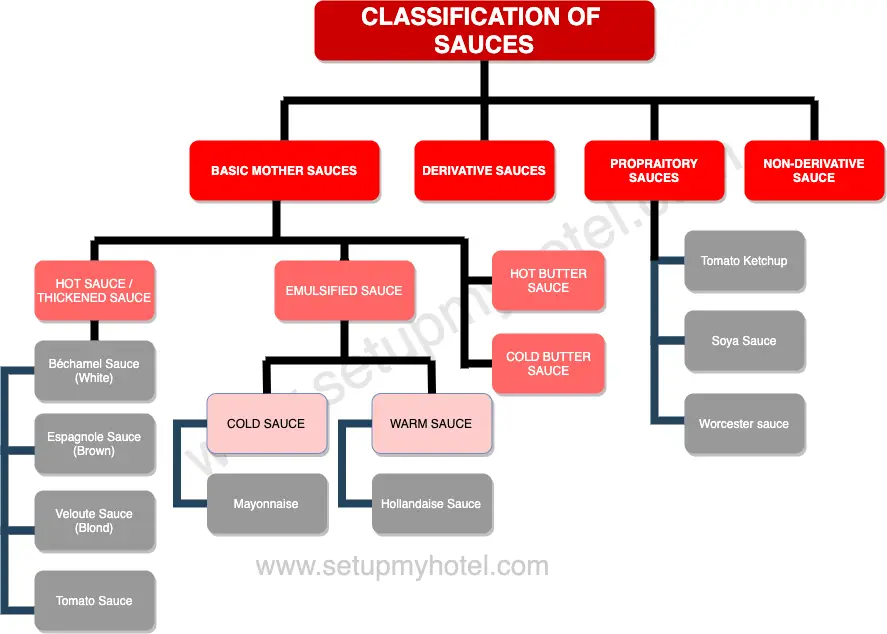
CLASSIFICATION OF SAUCES. Sauces are a crucial component of many cuisines worldwide, adding flavor, depth, and complexity to dishes. The classification of sauces is based on various factors such as preparation method, ingredients, and consistency. One way to classify sauces is based on their mother sauce. Mother sauces are the base sauces from which other sauces are derived. The five mother sauces are Béchamel, Velouté, Espagnole, Hollandaise, and Tomato sauce. Another way to classify sauces is based on their consistency. A few examples of sauce consistencies include thin, medium, and thick sauces. Thin sauces, also known as coulis, are smooth and runny, while medium sauces are thicker and have more body. Thick sauces are typically used as a topping or a dip and are the heaviest of the three. Sauces can also be classified based on their ingredients, such as sweet, savory, or acidic sauces. Sweet sauces are typically used in desserts, while savory sauces are used in meat dishes. Acidic sauces, such as vinaigrettes, are often used in salads and seafood dishes. In conclusion, there are several ways to classify sauces, and each classification serves a purpose in cooking. Understanding the different types of sauces and their uses can help elevate any dish to the next level.
Classification of Sauces or Types of Sauces Sauces are a crucial component of many cuisines worldwide, adding flavor, depth, and ...
Read more