HR – Bullying And Sexual Harassment Policy Sample Hotel Staff

BULLYING & HARASSMENT POLICY SAMPLE FOR HOTEL EMPLOYEES Bullying and harassment of employees, whether by colleagues or management, is a serious matter, and one that is not always easily recognised. The sample policy detailed below has been designed to assist in both the identification of incidents of bullying and harassment and in dealing with such incidents once a complaint has been received.
BULLYING & HARASSMENT POLICY SAMPLE FOR HOTEL EMPLOYEES Bullying and harassment of employees, whether by colleagues or management, is a ...
Read more

Types Of Utensils And Equipment Used In BAR

Bars and lobby lounges are places where people usually gather to relax and socialize. These places usually serve drinks and light snacks, which require different types of utensils for serving and consumption. Some of the most common types of utensils used in bars and lobby lounges include glasses, shakers, strainers, jiggers, and stirrers. Glasses come in different shapes and sizes, depending on the type of drink being served. For example, martini glasses are typically used for cocktails, while beer mugs are used for beer. Shakers and strainers are used for making cocktails. Shakers are used to combine ingredients, while strainers are used to strain out ice and other solids. Jiggers are small measuring cups used to measure the amount of alcohol in a drink. This is important in making cocktails, as the right amount of alcohol can make or break a drink. Stirrers are used to mix drinks, and can be made of glass, metal, or plastic. In addition to these utensils, bars and lobby lounges may also use other tools such as bottle openers, ice scoops, and cork screws. These tools help to make the process of serving drinks more efficient and professional. Overall, the type of utensils used in a bar or lobby lounge depend on the type of drinks being served and the establishment's preferences. However, having the right utensils is essential for creating a great customer experience and serving drinks in a professional manner.
Different Types of Utensils Used in BARs and Lobby Lounges  Bars and lobby lounges are places where people usually gather ...
Read more

HR – Sexual Harassment Policy Sample For Hotel Staff

As a hotel, we prioritize the safety and comfort of our guests and staff. We recognize that sexual harassment is a serious issue that can have a lasting impact on individuals and the workplace as a whole. That's why we have developed a comprehensive sexual harassment policy for our staff. Our policy defines sexual harassment as any unwelcome sexual advance, request for sexual favors, or other verbal or physical conduct of a sexual nature. This includes but is not limited to unwanted touching, comments, jokes, or gestures. We expect all staff members to adhere to the highest standards of professionalism and to treat each other with respect and dignity at all times. If a staff member experiences sexual harassment, we encourage them to report it immediately to their supervisor or a member of our Human Resources team. We take all reports of sexual harassment seriously and will conduct a thorough investigation. We will also take appropriate disciplinary action, up to and including termination, if necessary. We also provide regular training to all staff members on sexual harassment prevention and reporting. We believe that education is key to creating a safe and inclusive workplace for everyone. Thank you for your commitment to upholding our sexual harassment policy and for helping us create a workplace free from harassment and discrimination.
Sexual Harassment Policy Sample For Hotel Staff As a hotel, we prioritize the safety and comfort of our guests and ...
Read more

Security – How To Prevent Theft By Hotel Staff And Hotel Guests?

Hotels are a place where we expect to feel safe and secure. However, theft by hotel staff and guests is a real concern for many travelers. Luckily, there are steps you can take to prevent theft and protect your valuables. Firstly, always use the hotel safe provided in your room. This is the safest place to store your valuables, such as passports, jewelry, and cash. Additionally, avoid carrying large amounts of cash with you while out and about. Instead, use a credit card or traveler's checks for purchases. Another way to prevent theft is to keep your room locked at all times. When leaving your room, make sure to double-check that all windows and doors are securely locked. You can also use a doorstop or travel lock for added security. Lastly, be aware of your surroundings and trust your instincts. If something doesn't feel right, report it to hotel staff immediately. It's better to be safe than sorry. By following these simple steps, you can greatly reduce the risk of theft during your hotel stay, giving you peace of mind and a more enjoyable trip.
How to Prevent Theft By Hotel Staff and Hotel Guests? Hotels are a place where we expect to feel safe ...
Read more

HR – Hotel Staff Policy For Computer, Email And Internet Usage Sample

Hotel Staff Computer, E-mail, Social Media and Internet Policy Sample In today's digital age, it's important for hotels to establish policies regarding their staff's use of technology. A comprehensive policy can help prevent issues such as inappropriate use of social media, unauthorized access to confidential information, and the spread of malware. One key aspect of a hotel staff technology policy is the use of computers. This can include guidelines for appropriate internet usage, such as blocking access to certain websites, and rules regarding the installation of software or downloading of files. Email policies are also important, as staff members may handle sensitive information via email. A policy may dictate how email is to be used, including guidelines for sending and receiving messages, and rules regarding the storage and deletion of emails. Social media policies can help prevent staff members from posting inappropriate content or engaging in activities that could damage the hotel's reputation. This can include guidelines for how social media is to be used, rules regarding the use of personal accounts for work purposes, and directives for handling negative feedback or reviews. Finally, an internet policy can help prevent staff members from accessing inappropriate material or engaging in unauthorized activities online. This can include guidelines for internet usage, such as rules regarding the use of personal devices on hotel networks, and directives for preventing the spread of malware or other digital threats. Overall, a comprehensive staff technology policy can help ensure that hotels are able to provide their guests with a safe, secure, and professional experience.
Hotel Staff Computer, E-mail, Social Media and Internet Policy Sample In today’s digital age, it’s important for hotels to establish ...
Read more

Pre Opening – Hotel Checklist Format
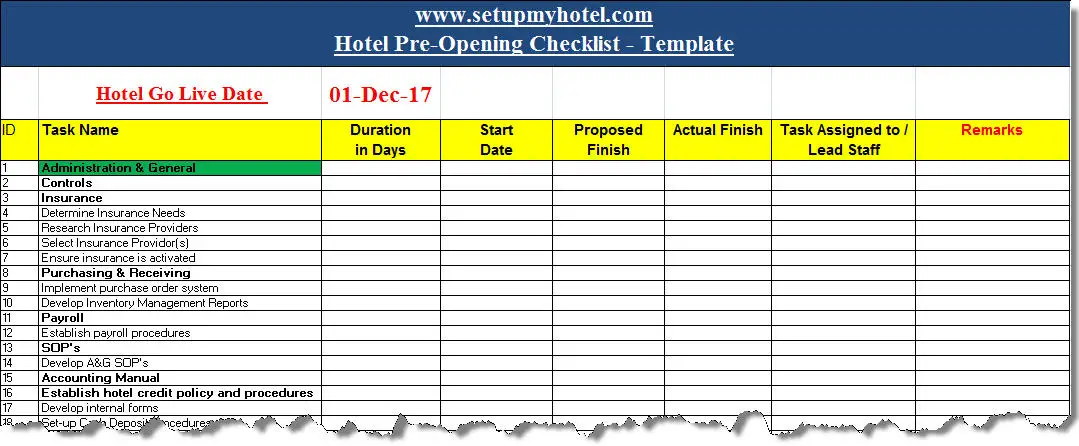
Pre Opening Checklist sample format for Hotels / Resorts The hotel pre-opening process with attention to every detail will likely lead to a smooth opening and this will also help to ensure a successful future hotel operation. The pre-opening checklist should be prepared in such a way as to monitor all interdependent activities including the monitoring of the progress of the pre-opening. The General Manager and each department head will each have checklists and all should be coordinated and monitored for progress by the General Manager as project manager. New age cloud-based software like teamwork helps to easily manage the pre-opening task and collaboration with the stakeholders. It is said that one of the top ten mistakes made during the pre-opening stage is to not have a pre-opening checklist.
Pre Opening Checklist sample format for Hotels / Resorts The hotel pre-opening process with attention to every detail will likely ...
Read more

Management – Achieving Energy Savings With Lighting Control
Saving electricity in guest rooms is not only environmentally responsible but also contributes to cost savings for hotels. Implementing energy-efficient practices not only reduces the hotel's carbon footprint but also enhances its overall sustainability. Here are some tips for saving electricity in the guest room: Energy-Efficient Lighting: Replace traditional incandescent bulbs with energy-efficient LED or CFL bulbs. These options use less energy and have a longer lifespan. Occupancy Sensors: Install occupancy sensors that automatically turn off lights and other electrical devices when guests are not in the room. This helps avoid unnecessary energy consumption. Key Card Switches: Connect the room's power supply to the key card system. When guests leave the room and remove their key card, it automatically turns off lights, air conditioning, and other electrical devices. Smart Thermostats: Use programmable or smart thermostats to regulate room temperature efficiently. Set temperature limits for when the room is unoccupied and adjust them based on guest preferences. Energy-Efficient Appliances: Choose energy-efficient appliances and equipment for the guest room, including televisions, mini-fridges, and air conditioning units. Educational Materials: Provide informational materials in the room that encourage guests to conserve energy, such as reusing towels, turning off lights when not needed, and adjusting thermostats when leaving the room. Natural Lighting: Maximize the use of natural light during the day by incorporating large windows and light-colored curtains. This reduces the need for artificial lighting. Unplug Electronics: Encourage guests to unplug chargers, electronic devices, and other equipment when not in use. Standby power consumption can be significant. Regular Maintenance: Ensure that all electrical systems and appliances in the guest room are regularly maintained. Properly maintained equipment operates more efficiently. Insulation and Sealing: Ensure proper insulation and sealing in the room to prevent air leaks. This helps maintain a comfortable temperature without overworking the heating or cooling systems. Water Heater Temperature: Set the water heater to a moderate temperature to avoid excessive energy consumption while still providing comfortable hot water for guests. Green Certification: Obtain green certifications such as LEED or ENERGY STAR for the hotel. Displaying such certifications can attract environmentally conscious guests. Energy Audits: Conduct regular energy audits to identify areas for improvement and implement energy-saving initiatives accordingly. Employee Training: Train hotel staff to be mindful of energy conservation practices and encourage them to report any malfunctioning or energy-wasting equipment. Feedback and Suggestions: Encourage guest feedback on energy-saving initiatives and consider implementing guest suggestion programs to gather ideas for further improvement. By combining these strategies, hotels can create a more energy-efficient and sustainable guest room environment, benefiting both the environment and the hotel's operational efficiency.
How To Save Electricity With Smart Systems And Procedures? Saving Electricity in the Guest Room For new hotel construction, choose ...
Read more

Security – Establishing An Effective Guestroom Lock Policy
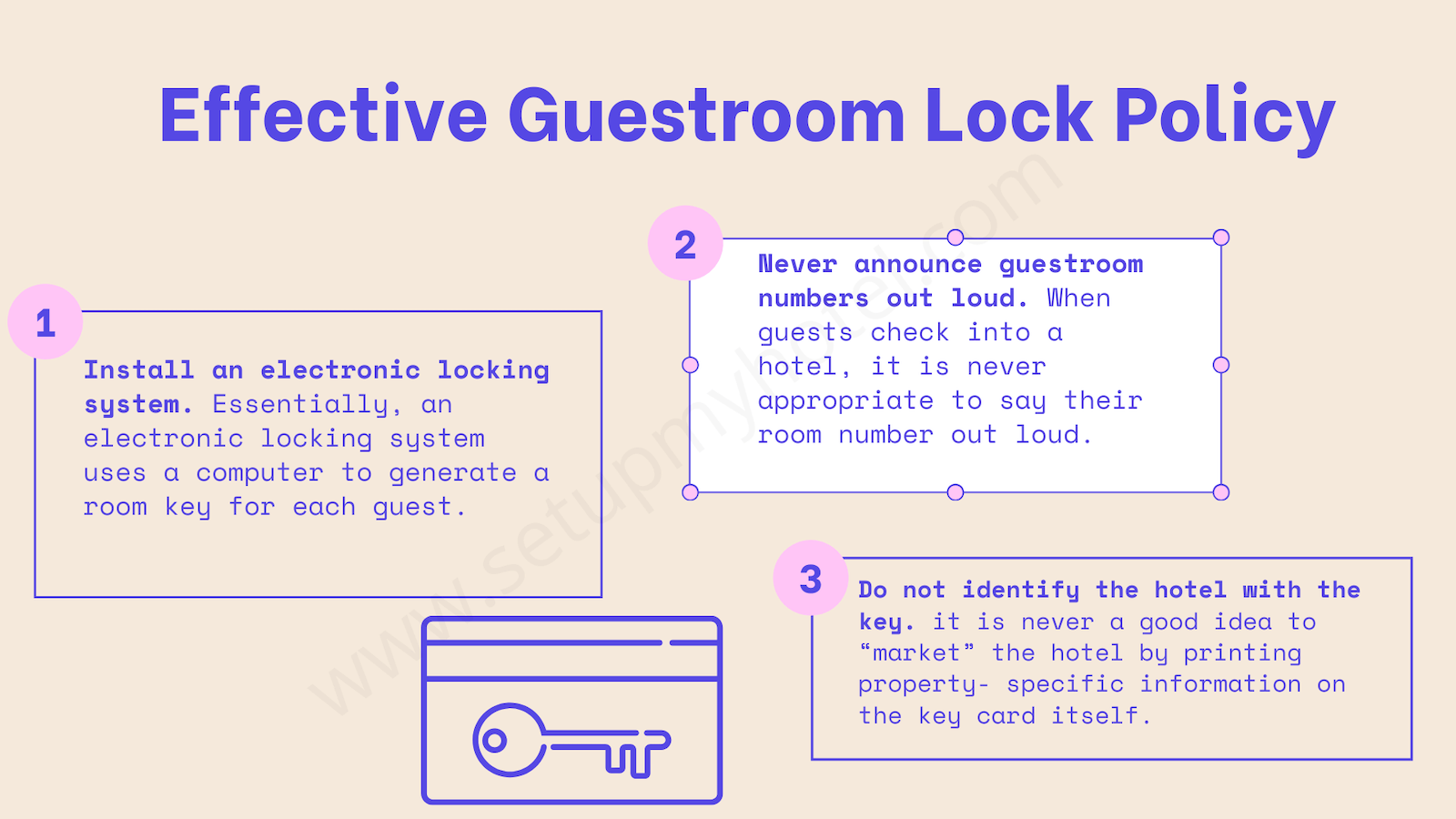
Establishing an Effective Guestroom Lock Policy The following steps outline an effective policy to protect the security of hotel guests by controlling the distribution of room keys and ensuring the effectiveness of guestroom locks. It also serves as a good example of how a safety program should be implemented. Notice the number of different components of a hotel’s operation that contribute to the effectiveness of this policy, from the use of technology (by installing electronic locking systems) to staff training (following procedures such as never announcing room numbers out loud) to management functions (performing a lock audit).
Establishing an Effective Guestroom Lock Policy The following steps outline an effective policy to protect the security of hotel guests ...
Read more

Security – 10 Safety Rules When Working With Electricity
10 Safety Rules When Working With Electricity 1. When you’ve turned off a circuit breaker to work on a piece of equipment, always put a piece of tape across it so someone else doesn’t accidentally turn it on. 2. After the circuit breaker is turned off, always test the equipment with a voltmeter to make sure you turned off the correct breaker and there aren’t other circuit breakers that need to be turned off. 3. Always check the voltmeter to make sure it works by testing it in a live outlet that you know works. 4. When doing a “jump” test: Turn off the power, place the jumpers across the switch to be jumped, turn the power back on to observe the results, turn the power off, and remove the jumper. 5. Never leave a switch jumped longer than the few seconds it takes to see the results of the test. 6. Never work on electrical equipment if the floor is wet. 7. If you must leave a piece of malfunctioning equipment, take precautions to ensure no one else will try to use it. Leave a big note taped to the front explaining the situation (e.g., “Out of Order, Will be back with parts this afternoon”). 8. When a piece of equipment is “temporarily” fixed, never let anyone use it until you are certain it is safe. 9. Never call a job “done” until you have thoroughly tested it and are 100 percent sure it is safe and fully operational. 10. Always know where you can turn off the power quickly in case of a problem, whether it’s at the plug or circuit breaker.
10 Safety Rules When Working With Electricity 1. When you’ve turned off a circuit breaker to work on a piece ...
Read more

HR – 3 Main Steps For Successful Hotel Staff Training
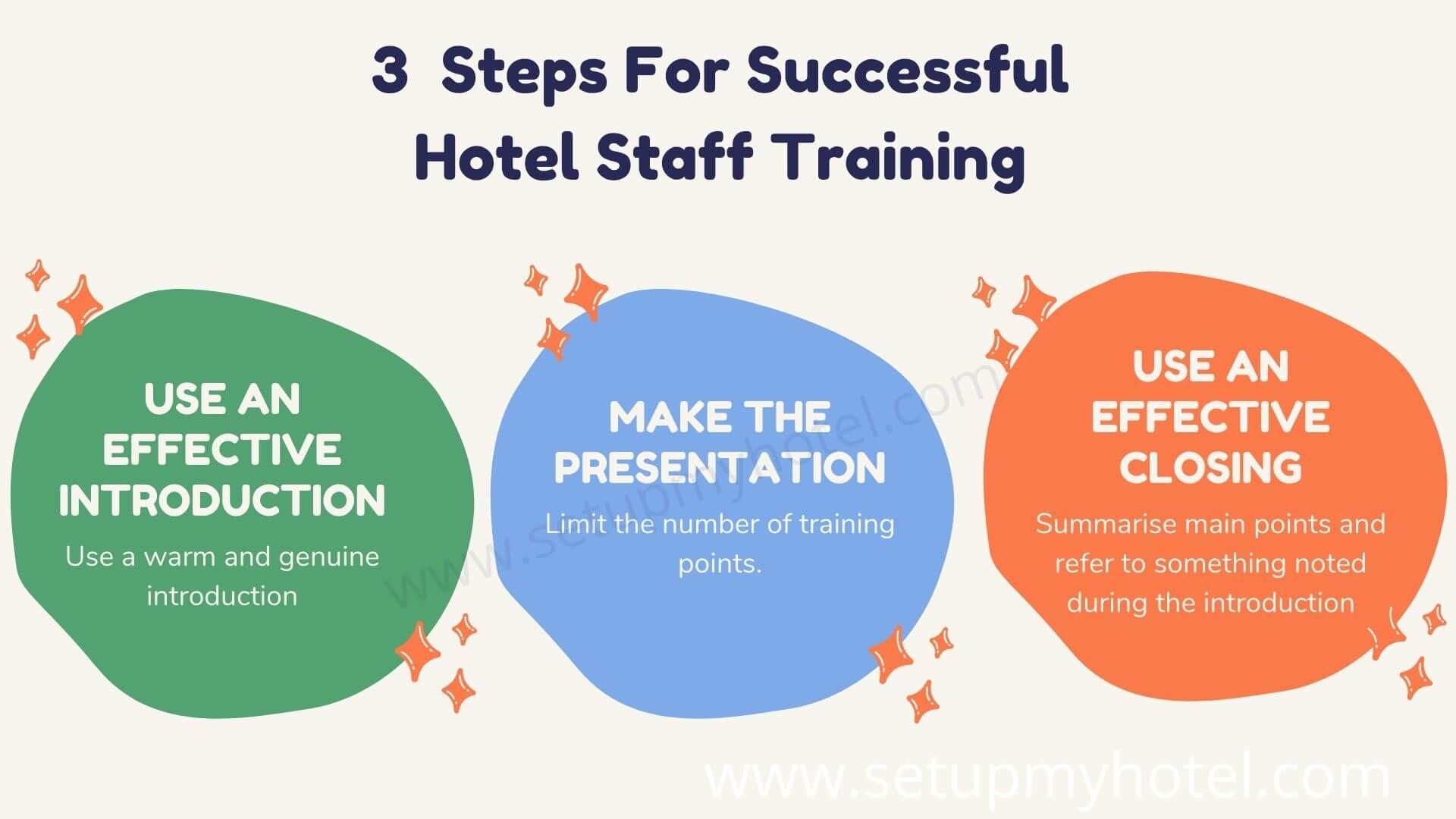
3 Steps for Successfull Presentation
Three Main Steps For Successful Hotel Staff Training Hotel Staff Trainer Presentation: Step 1: Use an Effective Introduction Step 2: ...
Read more